Hep-3B
The Hep-3B cell line is a human hepatocellular carcinoma (HCC) model derived from an 8-year-old African-American male with primary liver cancer. Unlike other hepatic cancer lines, Hep-3B cells are characterized by a complete deletion of the p53 gene and the presence of integrated hepatitis B virus (HBV) DNA, making them highly relevant for investigating both liver tumor biology and virus-associated hepatocarcinogenesis.
Morphologically, Hep-3B cells display epithelial features and grow in monolayers with a cobblestone appearance under standard culture conditions. These cells exhibit moderately differentiated hepatic characteristics and retain the ability to produce several liver-specific proteins, including alpha-fetoprotein (AFP), albumin, transferrin, and complement components. While their metabolic profile is more limited compared to primary hepatocytes, they express functional phase I and phase II drug-metabolizing enzymes, albeit at low levels.
A distinguishing feature of Hep-3B is its integration of HBV DNA into the host genome, which enables the study of chronic viral infection and its role in hepatocellular transformation. The cell line has been widely used in HBV-related liver cancer research to explore viral replication, protein expression, and host–virus interactions. It is also a valuable model for assessing the molecular consequences of p53 loss in hepatocarcinoma progression, given that the p53-null status significantly alters DNA damage response, apoptosis, and cell cycle regulation.
Hep-3B is commonly utilized in drug screening, hepatotoxicity testing, and gene regulation studies. Its compatibility with transient and stable transfection protocols makes it suitable for analyzing promoter activity, gene knockdown, and therapeutic gene delivery strategies. Additionally, Hep-3B xenografts can be established in immunodeficient mice, offering an in vivo model to evaluate tumorigenic potential and therapeutic efficacy of anti-cancer compounds.
In conclusion, the Hep-3B cell line offers a unique and clinically relevant model of hepatocellular carcinoma, particularly for studies involving HBV-associated oncogenesis and p53-deficient liver tumors. Its molecular features and versatility in experimental applications make Hep-3B a critical tool in liver cancer research and antiviral therapeutic development.
Successful gene modulation in Hep-3B hepatocellular carcinoma cells following transfection with Altogen Biosystems reagents (Catalog #6817, #6818, #6819). GAPDH protein levels were monitored in three conditions: siRNA-mediated knockdown, non-treated controls, and plasmid-mediated overexpression. The band intensity near 37 kDa reflects expected GAPDH expression, with visible reduction in siRNA-treated samples and increased intensity following DNA transfection.
These results validate Altogen’s Hep-3B transfection reagents for applications in gene silencing and overexpression studies. This system is ideal for investigating liver cancer signaling pathways, validating RNAi targets, and conducting functional studies on gene regulation in HCC models. The ability to reliably manipulate gene expression in Hep-3B cells supports its use in translational liver cancer research and preclinical therapeutic development
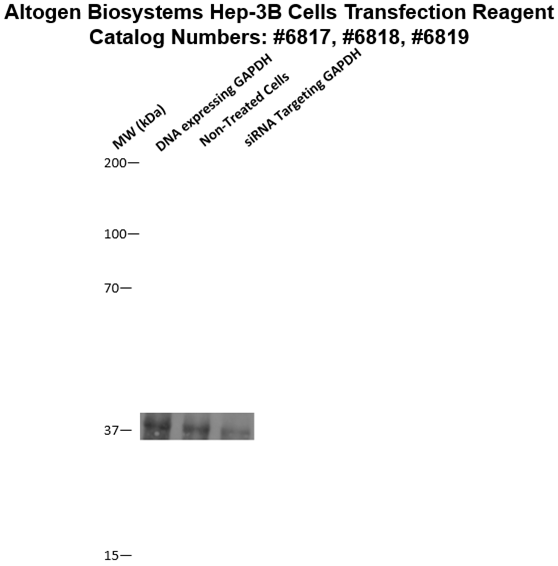
Protein expression of GAPDH in Hep-3B cells. DNA plasmid expressing GAPDH or siRNA targeting GAPDH were transfected into Hep-3B cells following Altogen Biosystems transfection protocol. At 72 hours post-transfection the cells were analyzed by Western Blot for protein expression levels (normalized by total protein, 10 µg of total protein loaded per each well). Untreated cells used as a negative control.